Post-Construction
The Pre-Handover Cleaning Checklist for Melbourne Builders
Ensure your new build passes inspection with a pristine handover clean
A comprehensive pre-handover cleaning checklist for Melbourne builders and developers, with room-by-room details, commonly missed items, and how professional handover cleaning reduces defect claims.
Why Handover Cleaning Matters for Builders
The handover clean is the final act of a construction project, and it carries disproportionate weight in shaping the client's overall impression of the build. Months of quality workmanship, careful project management, and skilled craftsmanship can be undermined by a handover that feels unfinished because the cleaning was inadequate. Conversely, a spotless handover amplifies every positive aspect of the build because the client experiences the finished product in its best possible presentation.
From a practical business perspective, professional handover cleaning reduces defect claims. When a client walks through a new build for the first time, they are looking at every surface with fresh, critical eyes. Construction dust on a shelf, adhesive residue on a window, or grout haze on floor tiles all get noted as defect items, even though they are cleaning issues rather than construction defects. Every item on a defect list requires a return visit, administrative time, and in some cases, subcontractor coordination. A thorough handover clean eliminates the majority of these cleaning-related defect items before the client ever sees the property.
The financial investment in professional handover cleaning is modest relative to the overall build cost. For a standard Melbourne residential build, a comprehensive handover clean typically represents one to two percent of the total project cost. Against this investment, consider the cost of return visits to address defect items, the opportunity cost of your team's time spent on remediation rather than new projects, and the reputational value of a client who is genuinely delighted at handover rather than compiling a list of complaints.
For Melbourne builders operating in a competitive market where referrals and online reviews drive new business, the handover experience is arguably the most important moment in the client relationship. A clean, immaculate property at handover generates the kind of positive emotional response that translates into five-star Google reviews, enthusiastic referrals to friends and family, and repeat business for future projects. The handover clean is not an afterthought. It is your closing argument for why this client should recommend you to everyone they know.
Interior Cleaning Checklist
A comprehensive interior handover clean covers every surface, fixture, and space in the new build. This checklist is based on our experience cleaning new builds across Melbourne, from townhouses in the inner suburbs to large family homes in the growth corridors, and reflects the items that building inspectors and clients most commonly examine.
All glass surfaces throughout the property need cleaning to a streak-free standard. This includes every window inside and out, all mirrors, shower screens, glass splashbacks in the kitchen, and any decorative glass panels or balustrades. Remove all manufacturer's stickers, protective film, and adhesive residue from glass surfaces. Adhesive residue is one of the most commonly flagged items at handover inspections, and it requires specific solvent-based treatment rather than just wiping. Window tracks must be cleaned thoroughly, including removing any plaster dust, mortar fragments, and construction debris that has accumulated in the channels during the build.
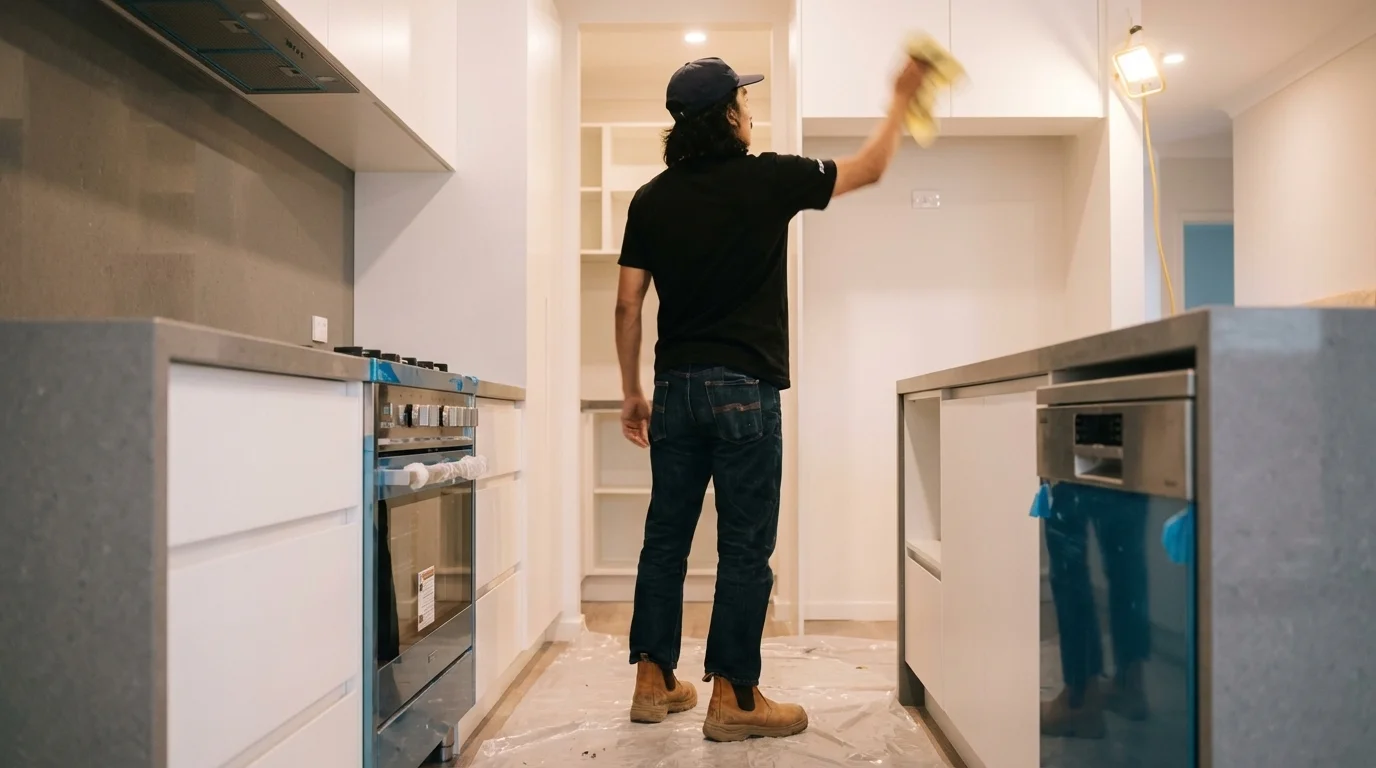
All cabinetry needs cleaning inside and out. This means every kitchen cupboard, bathroom vanity, wardrobe, and linen press. Open every door and drawer, wipe all interior surfaces including the floor of each cupboard, clean the shelves, and wipe the exterior including handles and hinges. Remove any adhesive residue from manufacturer labels on cabinet interiors. Clean the tops of all upper cabinets, which invariably accumulate significant construction dust that is invisible from normal standing height but immediately visible if the client stands on a step.
All fixtures need polishing. Taps, door handles, cabinet handles, hinges, towel rails, toilet roll holders, and any other hardware throughout the property should be free of fingerprints, adhesive residue, and construction grime. New fixtures often arrive with a protective coating or film that must be carefully removed without scratching the finish.
All benchtops, shelves, ledges, and horizontal surfaces need wiping. This includes kitchen benchtops, bathroom vanity tops, laundry benches, windowsills throughout the property, the tops of door frames, and any built-in shelving.
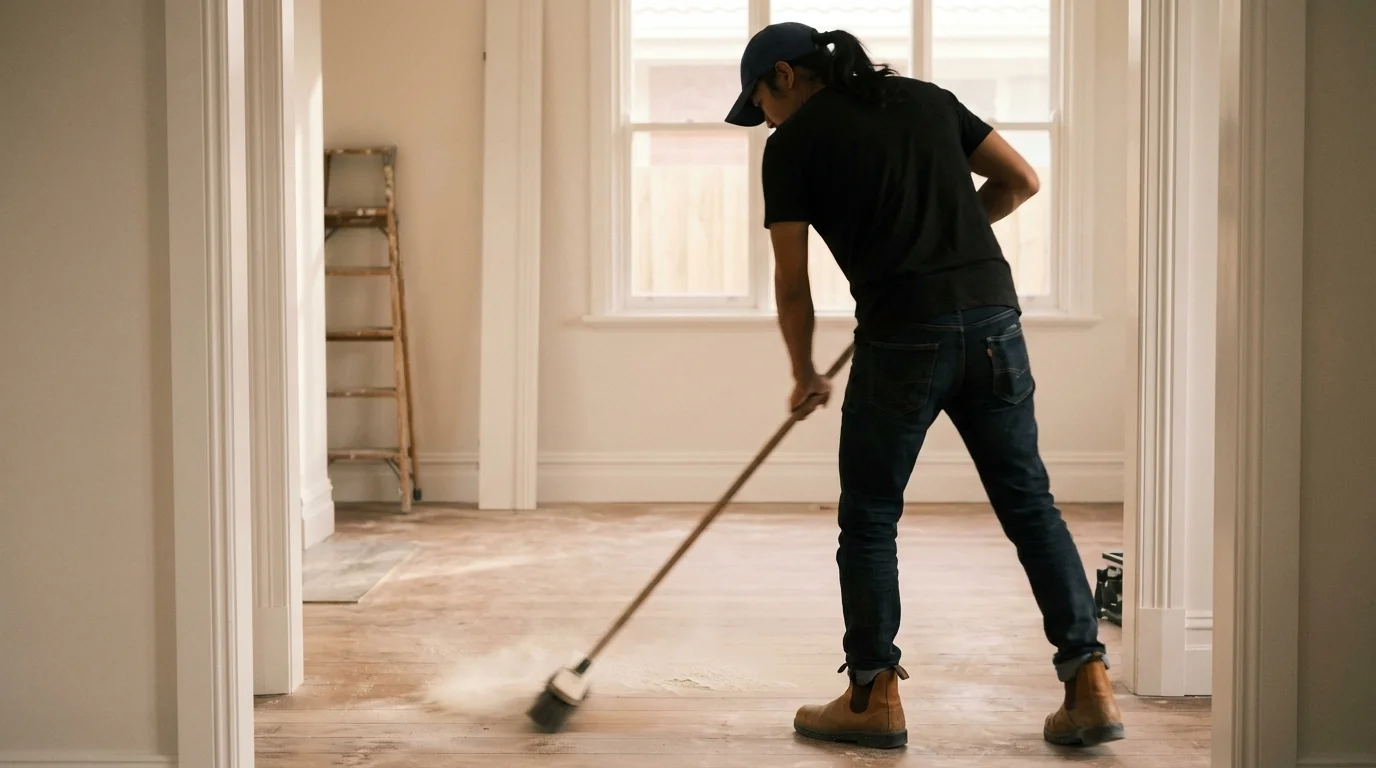
Floors need cleaning appropriate to their material. Tiled floors require grout haze removal, which is a specialised cleaning task involving an acidic grout haze remover applied with appropriate dwell time and scrubbed to dissolve the haze without affecting the tile surface. Timber and engineered floors need gentle cleaning that removes construction dust without introducing excessive moisture. Carpet areas need thorough vacuuming and potentially steam cleaning if construction dust has settled deeply into the fibres.
Paint splatters need removal from all surfaces including window glass, tiles, fixtures, and floors. Fresh paint splatters on glass can usually be removed with a glass scraper and soapy water. Dried splatters on other surfaces may require specific solvents appropriate to the surface material.
Air vents, return air grilles, and duct openings need clearing of construction dust. During the build, significant volumes of dust enter the duct system even if vents are covered. Cleaning the visible vent covers and the accessible duct openings presents a clean appearance, though full duct cleaning may be recommended as a separate service for builds with extended construction periods.
All light fittings need cleaning, including downlight bezels, pendant fittings, and any decorative light fixtures. Construction dust settles on light fittings and becomes baked on once the lights generate heat, so cleaning before the client moves in is significantly easier than cleaning after the fittings have been in use.
All appliances need cleaning inside and out. Oven interior and racks, cooktop surface, rangehood and filter, dishwasher interior, and any other built-in appliances should be clean and free of manufacturing residue, adhesive, and construction dust.
Questions? We're Here to Help
Call us directly or send through your details. We typically respond within 24 hours.
Contact UsExterior Cleaning Checklist
The exterior presentation of a new build at handover sets the tone for the client's entire experience. Arriving at a property with a clean driveway, clear entry, and sparkling external windows creates a positive first impression that colours everything that follows.
External windows need cleaning on all accessible surfaces. For multi-storey builds, this may require water-fed pole systems or other professional equipment for upper-level windows. External glass is typically more heavily soiled than interior glass due to direct exposure to construction dust, mortar splash, and environmental fallout throughout the build period.
Balconies and terraces need thorough cleaning including floor surfaces, balustrades, and any fixed seating or planters. Tile balconies may have grout haze that needs the same treatment as interior tiled floors. Glass balustrades need cleaning inside and out, with particular attention to removing any adhesive from protective coverings applied during construction.
Garage floors should be cleaned of all construction debris, concrete dust, and any staining from materials stored during the build. For concrete garage floors, pressure washing is typically the most effective method. Ensure the floor is dry or nearly dry by the time the client arrives, as a wet garage floor does not present well.
Driveways and paths need pressure washing to remove construction staining, tyre marks from delivery vehicles, and any concrete or mortar splashes. This is one of the highest-impact cleaning tasks at handover because the driveway is literally the first thing the client sees when they arrive. A clean, freshly pressure-washed driveway signals that the same care has been applied throughout the property.
External cladding should be wiped down or washed depending on the material. Render, weatherboard, and metal cladding all accumulate construction dust and may have mortar splashes or paint marks that need attention. For rendered surfaces, gentle pressure washing at appropriate distance removes dust without damaging the render.
Landscaped areas need clearing of any remaining construction debris, including offcuts, packaging, cable ties, and the general detritus that accumulates around a building site over the construction period. Garden beds, lawn areas, and any external features installed by the landscaper should be presented clean and tidy.
The letterbox, front entry, and any portico or covered entry area deserve particular attention. This is where the client stands during handover, key in hand. These areas should be immaculate: swept, wiped, and free of any construction evidence.
Bin enclosures, meter boxes, and any external storage areas should be cleaned and free of construction waste. It is common for trade waste to accumulate in these areas during the build, and clearing them completely is an easy win for handover presentation.
Commonly Missed Items That Trigger Defect Claims
After cleaning hundreds of new builds across Melbourne, we have compiled a list of the areas most frequently missed by non-specialist cleaners and most frequently flagged by building inspectors and clients. These are the details that separate a good handover clean from a thorough one.
Inside rangehood ducting is missed on the majority of new build cleans performed by general cleaners. The accessible portion of the rangehood duct, the section between the rangehood unit and the external vent, accumulates significant construction dust and is visible when the rangehood light illuminates the area. Cleaning this requires reaching inside the duct opening and wiping the accessible surfaces.
Behind toilets and under vanities are areas that inspectors check specifically because they know cleaners often miss them. The narrow space between the toilet and the wall, the floor area behind the toilet pedestal, and the floor and wall surfaces under bathroom vanities all accumulate dust and construction residue. These areas are difficult to reach but immediately visible during a thorough inspection.
Window tracks and weep holes are consistently among the top defect items at handover inspections. Window tracks fill with plaster dust, mortar fragments, and fine debris during construction. Weep holes, the small drainage openings at the bottom of window frames, become blocked with construction debris and need clearing to function correctly. An inspector who runs a finger along a window track and finds grime will note it as a defect.
Inside wardrobe cavities, particularly the top shelves and the floor at the back, collect construction dust throughout the build. Because these spaces are above eye level and deep, they are frequently overlooked. Clients who open their new wardrobes and find dusty shelves have an immediate negative reaction, regardless of how clean the rest of the property appears.
Adhesive residue on glass and fixtures is one of the most common handover defects. Manufacturer stickers on windows, protective film adhesive on shower screens, and label residue on fixtures and appliances all need complete removal. Incomplete adhesive removal, where the sticker is removed but the sticky residue remains, is worse than leaving the sticker in place because it collects dust and looks neglected.
Grout haze on floor tiles is a particular problem because it is not always visible from a standing position under normal lighting. However, when viewed at a low angle, particularly in natural light, grout haze creates an obvious cloudy film across the tile surface. Inspectors know to check from a low angle, and clients notice it quickly once they start living in the space. Proper grout haze removal using appropriate chemical treatment is essential for tiled surfaces.
Air conditioning vents and return air grilles accumulate construction dust that is immediately visible. Ceiling-mounted supply vents in particular show dust clearly against their typically white finish. A quick wipe of every vent in the property is a small task that prevents a common defect item.
Garage ceilings and walls are cleaned in fewer than half of the handover cleans we see from other providers. While the garage is not a living space, it is part of the new build and clients expect it to be clean. Garage walls accumulate dust from concrete floor finishing, and garage ceilings often have visible dust deposits, paint overspray, and cobwebs that should be addressed before handover.
Working with Professional Handover Cleaners
For Melbourne builders who want their handover cleans delivered consistently and to a standard that minimises defect lists, working with a specialist cleaning team offers clear advantages over ad-hoc arrangements with general cleaners.
A specialist handover cleaning team understands what inspectors look for. Our team has cleaned enough new builds across Melbourne to know the inspection points that generate defect items, and we address every one of them as a matter of course. This knowledge comes from experience, from feedback received through builders we work with regularly, and from understanding the standards that building inspectors and owner's advocates apply.
Timing and coordination are critical in new build handovers. The clean needs to happen after all trades have finished but before the client inspection. In practice, this often means working within a tight window, sometimes as little as one to two days. For builds where finishing trades are still completing minor items, we can work around them, cleaning completed areas while they finish, and returning to clean the final areas once they depart.
For Melbourne builders completing multiple projects, we offer consistent pricing and priority scheduling. When you work with us regularly, we understand your build quality, your client expectations, and the specific items that your inspection process focuses on. This familiarity makes each clean more efficient and more effective, because our team knows exactly what you need without detailed briefing for every job.
We provide before-and-after documentation of every handover clean, including close-up images of common inspection points. This documentation protects the builder by providing evidence that a thorough professional clean was completed before the client inspection. If a defect item is raised that relates to cleaning, photographic evidence allows you to demonstrate that the area was clean at the time of handover and that any subsequent issues occurred after the cleaning was completed.
At Nusara, our post-construction and handover cleaning draws on the same attention to detail and care that defines all our services. We understand that a builder's reputation rides on these final moments of the project, and we treat that responsibility with the seriousness it deserves. If you are a Melbourne builder looking for a reliable handover cleaning partner, we would welcome the opportunity to discuss how we can support your projects.
Ready for a Spotless Space?
Get a free, no-obligation quote from Melbourne's trusted cleaning professionals.
Get a Free Quote