Deep Cleaning
Bathroom Deep Cleaning Guide: Professional Tips for a Sparkling Bathroom
Tackle mould, limescale, and grime with professional techniques
Professional bathroom deep cleaning techniques for Melbourne homes, covering mould removal, limescale treatment, grout restoration, and maintaining pristine fixtures.
Professional Mould Treatment
Melbourne's humidity, particularly during the cooler months when bathroom ventilation is reduced, makes mould an ongoing challenge in bathrooms across the city. Understanding the different types of mould and the most effective treatments for each prevents both the health risks mould presents and the property damage it causes when left untreated.
Surface mould on tiles, typically appearing as black or dark green spots along grout lines and in shower recesses, responds well to targeted treatment with hydrogen peroxide or tea tree oil solutions. For hydrogen peroxide treatment, use the three percent solution available from any chemist. Spray it directly onto mouldy areas, let it sit and fizz for fifteen to thirty minutes, then scrub with a grout brush and rinse. The advantage of hydrogen peroxide over chlorine bleach is that it kills mould without producing toxic fumes in enclosed bathroom spaces.
Tea tree oil is an effective natural antifungal. Mix two teaspoons of pure tea tree oil per cup of water in a spray bottle. Apply to mouldy surfaces and do not rinse. The tea tree oil continues to work after application, killing mould spores and inhibiting regrowth. The scent dissipates within a day or two.
Black mould in silicone sealant is the most stubborn bathroom mould issue. If the mould is on the surface of the silicone, treatment with hydrogen peroxide or commercial mould remover may improve the appearance. However, mould that has penetrated into the silicone material itself cannot be fully cleaned regardless of what product you use. The silicone has become a mould reservoir, and the only effective long-term solution is removing the old silicone and applying fresh sealant.
Professional silicone re-sealing is straightforward. Old silicone is cut away, the surfaces are cleaned and prepared, and new sanitary-grade silicone is applied. The cost is typically eighty to one hundred and fifty dollars for a standard shower recess, and the result is both visually transformative and hygienically superior to attempting to clean permanently mouldy silicone.
For mould on painted bathroom ceilings, which is common in older Melbourne homes with inadequate ventilation, treatment with a hydrogen peroxide solution followed by application of an anti-mould ceiling paint provides the most durable solution. Simply painting over mould without treatment allows it to grow through the new paint within months.
Limescale and Hard Water Deposits
Melbourne's water supply contains varying levels of dissolved minerals depending on your suburb and the reservoir source supplying your area. These minerals, primarily calcium and magnesium, deposit on surfaces as water evaporates, creating the white, chalky buildup known as limescale. Over time, limescale dulls the appearance of tapware, clouds glass shower screens, and reduces the water flow through shower heads.
Citric acid is the most effective and eco-friendly treatment for mineral deposits in bathrooms. Dissolve two to three tablespoons of citric acid powder, available from supermarkets in the baking aisle, in a spray bottle of warm water. Apply to affected taps, shower heads, glass screens, and tile surfaces. Let the solution work for ten to fifteen minutes, which gives the acid time to dissolve the mineral deposits chemically. Then scrub with a non-scratch pad and rinse thoroughly.
For shower heads with heavy mineral buildup that restricts water flow, unscrew the head and soak it completely in undiluted white vinegar for two to four hours, or overnight for severe cases. The acetic acid in vinegar dissolves calcium deposits within the water channels. After soaking, scrub the outside with a brush, rinse thoroughly, and reinstall. The improvement in water flow is often dramatic.
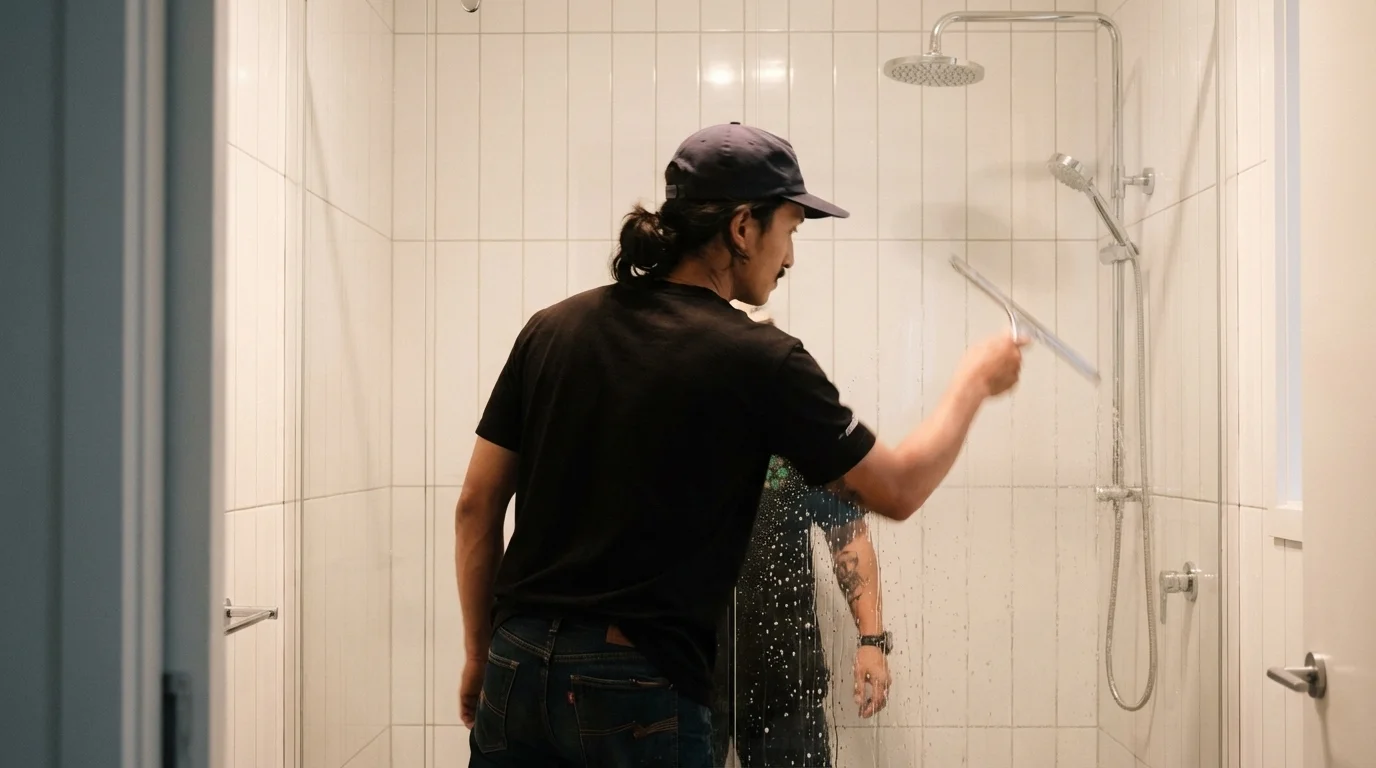
Glass shower screens develop a cloudy film from mineral deposits combined with soap residue over time. For moderate buildup, the citric acid spray treatment described above is effective. For heavy buildup that has been accumulating for months or years, you may need a dedicated glass restoration product that combines acid treatment with mild abrasion. Apply in a circular motion with a non-scratch pad, rinse, and squeegee dry.
Prevention is significantly easier than remediation. Using a shower squeegee on glass screens after every use takes fifteen seconds and prevents the majority of mineral buildup. For tapware, a weekly wipe with a damp microfibre cloth prevents deposits from establishing. These simple habits reduce the need for periodic heavy descaling and keep your bathroom looking freshly cleaned between deep cleans.
Questions? We're Here to Help
Call us directly or send through your details. We typically respond within 24 hours.
Contact UsTile and Grout Detailing
Bathroom tile and grout cleaning requires a systematic approach that addresses both the tile surfaces and the grout lines, which have different cleaning needs and different vulnerabilities.
For best results, work in small sections rather than attempting to clean the entire bathroom at once. This ensures cleaning products have appropriate dwell time without drying out, and allows you to focus attention on heavily soiled areas without rushing.
Steam cleaning tiles first is the professional approach we use. Steam loosens embedded dirt, kills bacteria and mould on contact, and prepares surfaces for targeted grout treatment. For home cleaning without a steam cleaner, a thorough spray with hot water and cleaning solution followed by a five-minute dwell time achieves a similar preparatory effect.
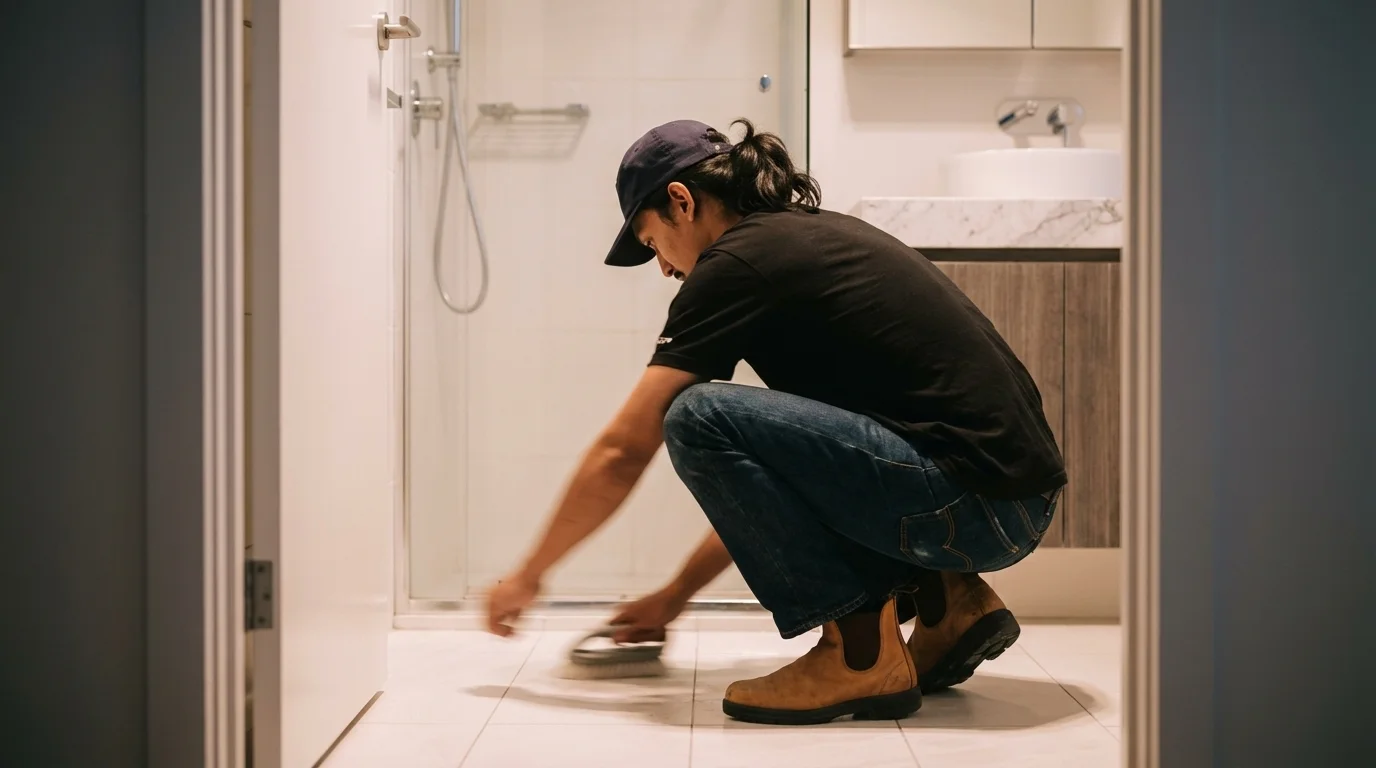
Grout cleaning requires a narrow brush and patience. Apply your chosen grout cleaner, whether baking soda paste, hydrogen peroxide, or a commercial grout product, along the grout lines. Work the product into the grout with a stiff-bristled brush using a back-and-forth motion along the grout line, not in circles which tend to spread dirty product onto tile surfaces. Rinse each section thoroughly before moving to the next.
Floor-to-ceiling tile bathrooms, which are common in Melbourne apartments and modern homes, benefit from annual professional grout treatment. Professional cleaning maintains consistent grout colour throughout the bathroom and prevents mould from penetrating deeply into the grout where surface cleaning cannot reach.
After cleaning, seal grout lines with a quality grout sealer. This is arguably the most important step in grout maintenance because it prevents moisture, soap, and mould from penetrating into the porous grout material. Unsealed grout absorbs moisture and contaminants like a sponge, making it progressively harder to clean. Sealed grout repels moisture and stays clean significantly longer.
For grout that has discoloured beyond what cleaning can restore, grout colour sealing provides a cost-effective alternative to re-grouting. A pigmented grout sealer is applied over existing grout, providing both a fresh colour and a protective seal in a single application.
Fixture and Tapware Polishing
Modern bathrooms feature tapware and fixtures in a range of finishes, and each requires specific care to maintain its appearance. Using the wrong cleaning product or technique on your bathroom fixtures can cause permanent damage that is expensive to correct.
**Chrome:** The most common and most forgiving finish. Chrome responds well to most all-purpose cleaners applied with a microfibre cloth. For a high-polish finish, spray with glass cleaner and buff with a dry microfibre cloth. Chrome is relatively resistant to chemical damage but can scratch from abrasive pads or cleaners, so always use soft materials.
**Brushed nickel:** A popular finish in contemporary Melbourne bathrooms that requires more care than chrome. Always wipe in the direction of the grain, which is the fine directional texture visible on the surface. Circular wiping motions can create visible marks that catch light differently from the surrounding grain. Use only gentle, non-abrasive cleaners. Avoid vinegar and acidic products which can damage the nickel plating over time.
**Matte black:** The most demanding finish to maintain because it shows water spots, fingerprints, and cleaning marks readily. Use a soft, damp microfibre cloth for daily maintenance. For deeper cleaning, use a pH-neutral cleaner applied to the cloth rather than sprayed directly on the fixture. Avoid any abrasive products or pads. Many matte black finishes have a protective coating that harsh chemicals can strip, leaving the finish vulnerable to damage.
**Brass and copper:** These finishes may be lacquered (clear-coated) or unlacquered (living finish). Lacquered brass should be cleaned with gentle soap and water only, as solvents and harsh cleaners can damage the lacquer. Unlacquered brass and copper are designed to develop a patina over time. If you prefer the patina, clean gently with soap and water. If you prefer a bright finish, use a dedicated brass or copper cleaner periodically.
**Gold-finish tapware:** Becoming more common in premium Melbourne bathrooms. Most gold finishes are PVD (Physical Vapour Deposition) coatings that are durable but not indestructible. Use only gentle cleaners and soft cloths. Avoid all acidic products, abrasives, and harsh chemicals.
Regardless of finish, the key to maintaining beautiful bathroom fixtures is consistent, gentle care rather than periodic intensive cleaning. A daily wipe with a damp microfibre cloth prevents the buildup that necessitates aggressive cleaning methods.
Ready for a Spotless Space?
Get a free, no-obligation quote from Melbourne's trusted cleaning professionals.
Get a Free Quote