Cleaning Tips
The Ultimate Carpet Stain Removal Guide for Melbourne Homes
Professional techniques for every type of carpet stain
Professional carpet stain removal techniques for common stains in Melbourne homes, with step-by-step instructions, product recommendations, and advice on when to call professional carpet cleaners.
The Golden Rules of Carpet Stain Removal
Before you reach for any cleaning product, understanding the fundamental principles of stain removal will dramatically improve your success rate. These rules apply to every type of stain on every type of carpet, and violating them often makes the situation worse rather than better.
Act immediately. The single most important factor in successful stain removal is speed. The longer a stain sits, the deeper it penetrates into carpet fibres and the more thoroughly it bonds with the material. A red wine spill treated within the first thirty seconds has an almost one hundred percent removal rate with basic household products. The same spill left for twenty-four hours may require professional treatment and still leave a shadow. Whatever you are doing when a spill happens, stop and deal with it. The dishes can wait. The phone call can be returned. Time is the enemy.
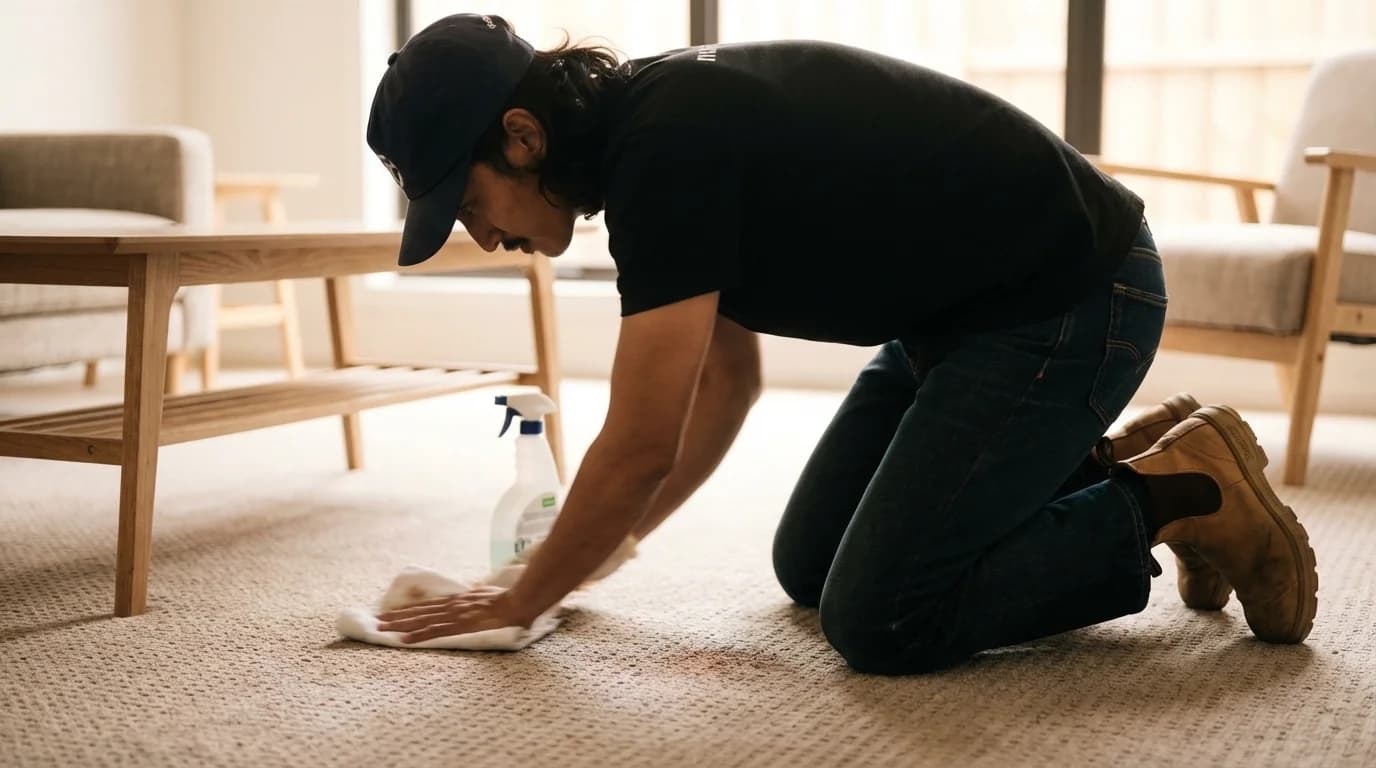
Blot, never rub. This is the rule that most people instinctively break. When something spills on the carpet, the natural response is to grab a cloth and scrub vigorously. This is the worst thing you can do. Rubbing pushes the stain deeper into the carpet pile, spreads it across a larger area, and can damage carpet fibres by twisting and fraying them. Instead, place a clean white cloth or paper towel over the stain and press down firmly, lifting and repositioning to a clean section of the cloth as it absorbs the liquid. Work from the outside of the stain inward to prevent spreading.
Always work from the outside edge of a stain toward the centre. Applying cleaning solution to the middle of a stain and working outward pushes the dissolved stain material into clean carpet, expanding the affected area. By starting at the outer edge and working inward, you contain the stain and gradually reduce its footprint.
Test any cleaning solution on an inconspicuous area before applying it to the stain. A small area of carpet behind a piece of furniture or inside a wardrobe is ideal. Apply the solution, wait ten minutes, and check for any colour change, discolouration, or texture damage. This takes a few minutes but prevents the scenario where your stain treatment damages the carpet worse than the stain itself.
Use cold water first. Hot water sets protein-based stains like blood, egg, and dairy products permanently into carpet fibres by effectively cooking the protein. Even for non-protein stains, cold water is a safer starting point. If cold water proves insufficient, you can escalate to warm water or other treatments. But once a protein stain has been set with hot water, professional intervention is the only path to removal, and success is not guaranteed.
Use white cloths and towels for blotting. Coloured cloths can transfer dye to wet carpet, creating a new stain on top of the one you are trying to remove. White cotton cloths, white paper towels, or plain white tissues are the safest blotting materials.
Common Household Stains and How to Treat Them
Red wine is perhaps the most feared carpet stain, and in Melbourne where wine is central to social entertaining, it is one of the most common spills we are asked to treat. The tannins and pigments in red wine bond rapidly with carpet fibres, making speed essential. Immediately blot as much liquid as possible with white paper towels, pressing firmly and using fresh towels as each one saturates. Apply cold water generously to the stain and continue blotting. Once you have removed as much as possible with cold water, mix one tablespoon of dish soap with one tablespoon of white vinegar in two cups of warm water. Apply this solution to the stain with a clean cloth, blotting and repeating until the colour lifts. For stubborn remnants on light carpets, a solution of one part hydrogen peroxide to two parts water can address remaining discolouration, but always test hydrogen peroxide on a hidden area first as it can lighten some carpet dyes.
Coffee and tea stains are a daily reality in Melbourne homes. These tannin-based stains respond well to prompt treatment. Blot immediately to remove as much liquid as possible, then apply cold water with a drop of dish soap and continue blotting. For dried coffee or tea stains, mix one tablespoon of white vinegar with one tablespoon of dish soap in two cups of warm water. Apply to the stain, let it sit for five minutes, then blot with a clean white cloth. Repeat until the stain lifts. Milk-based coffee drinks like lattes and cappuccinos add a protein component to the stain, so avoid hot water in the initial treatment to prevent setting the milk protein.
Pet accidents are arguably the most challenging household stain because they involve both discolouration and odour. For fresh urine, blot immediately with thick layers of paper towel, pressing firmly to extract as much liquid as possible from deep in the carpet pile. Apply cold water and blot again. Then apply an enzymatic cleaner, available from pet stores and most supermarkets, following the product's instructions for dwell time. Enzymatic cleaners break down the organic compounds in urine at a molecular level, eliminating both the stain and the odour. This is important because if any trace of urine odour remains in the carpet, pets will often return to the same spot. For old pet stains that have dried, enzymatic cleaners still work but may need multiple applications with extended dwell times.
Blood stains require cold water exclusively. Never use warm or hot water on blood, as heat denatures the protein and bonds it permanently to carpet fibres. Apply cold water to the stain and blot repeatedly with a white cloth. For fresh blood, cold water alone often achieves complete removal. For dried blood, apply hydrogen peroxide directly to the stain, observing the fizzing action as it breaks down the blood protein. Blot and repeat. Hydrogen peroxide works well on light carpets but should be tested on dark or coloured carpets first, as it may lighten the dye.
Mud is a common Melbourne-specific stain, particularly during the wetter months from May through September when every walk through the garden or trip to the local park tracks moisture and soil indoors. Counterintuitively, the best approach to mud stains is to let the mud dry completely before attempting removal. Wet mud that is rubbed or treated with water spreads further into the carpet. Once dry, vacuum the area thoroughly to remove as much dried soil as possible, then treat any remaining discolouration with a dish soap and water solution.
Food and Cooking Stains
Melbourne's food culture means our carpets encounter an impressive variety of culinary stains. Each type of food stain has its own chemistry and requires a targeted approach.
Tomato-based stains from pasta sauce, pizza, and tomato soup contain both pigment and acid that can set quickly. Scrape any excess carefully with a spoon or blunt knife, working from the outside inward to avoid spreading. Apply a solution of one teaspoon of dish soap in one cup of cold water. Blot the stain with this solution, working inward, and repeat with fresh solution until the colour lifts. If tomato pigment remains after the dish soap treatment, apply a solution of one tablespoon of white vinegar in two cups of water, let it sit for five minutes, and blot again.
Curry and turmeric stains are notoriously difficult because turmeric contains curcumin, a powerful natural dye. If you catch a curry spill immediately, scrape the excess and apply glycerine directly to the stain. Glycerine softens the curcumin and makes it easier to lift. Let it sit for thirty minutes, then treat with a dish soap solution and blot repeatedly. For set curry stains, a paste of baking soda and water applied for several hours before treatment can draw some of the pigment from the fibres. Full removal of dried curry stains often requires professional steam cleaning.
Grease and oil stains from cooking splatter, dropped food, or oily substances respond well to absorbent treatment. Immediately apply a generous layer of baking soda or cornstarch over the oil stain. These powders absorb the oil from the carpet fibres. Let the powder sit for at least fifteen minutes, preferably thirty, then vacuum thoroughly. Apply a dish soap solution to the remaining stain and blot. Repeat the baking soda and dish soap treatment if needed. For larger grease spills, multiple rounds of absorbent powder may be necessary before the dish soap treatment is effective.
Chocolate stains are common in homes with children and respond well to a staged approach. If the chocolate is still soft, scrape off as much as possible with a blunt knife. If it has dried, place a plastic bag of ice on the chocolate for fifteen minutes to harden it completely, then scrape. Once the solid material is removed, apply a dish soap solution and blot. For any remaining brown discolouration, particularly from dark chocolate, apply a hydrogen peroxide solution and blot gently. As always, test hydrogen peroxide on a hidden area first.
Berry stains from blueberries, strawberries, and raspberries contain natural dyes that bond rapidly with carpet fibres. Treat immediately by blotting excess and flushing with cold water. Apply a mixture of one tablespoon of white vinegar and one tablespoon of dish soap in two cups of cold water. Let this sit for fifteen minutes, then blot. Berry stains that have dried more than a few hours are extremely difficult to remove completely with household methods and may need professional treatment.
Questions? We're Here to Help
Call us directly or send through your details. We typically respond within 24 hours.
Contact UsSpecialist Stains That Need Extra Care
Some stains fall outside the food and drink category and require specific treatment approaches.
Ink stains from pens are among the most stubborn carpet stains. For ballpoint ink, apply isopropyl rubbing alcohol directly to the stain using a cotton ball, blotting gently. The alcohol dissolves the ink carrier and releases the pigment from the fibres. Use fresh cotton balls as they absorb ink, and work from the outside in. For permanent marker, the same alcohol treatment applies but requires more patience and repetition, and complete removal is not always possible without professional intervention.
Paint spills depend entirely on the paint type. Water-based latex paint that is still wet can be removed with dish soap and water through careful blotting. Keep the paint wet as long as possible during treatment, because once latex paint dries in carpet fibres, it is essentially permanent without professional solvent treatment. Oil-based paint requires mineral turpentine or paint thinner, applied carefully to avoid damaging carpet backing. For any significant paint spill, calling a professional cleaner immediately gives the best chance of full removal.
Nail polish on carpet is a scenario that many Melbourne homeowners face. Acetone-based nail polish remover works, but it must be used with extreme caution. Acetone can dissolve certain carpet fibres, particularly those made from acetate or modacrylic. Test on a hidden area first. Apply acetone sparingly with a cotton ball, blotting gently. Work in small sections, replacing the cotton ball frequently. For light-coloured carpets, the nail polish colour is the primary concern. For dark carpets, the acetone may bleach the dye, creating a light spot that is actually worse than the nail polish stain.
Candle wax on carpet occurs most commonly during Melbourne's cooler months when candles are in regular use. The treatment is straightforward but requires patience. Place a bag of ice on the wax to harden it completely, then break the hardened wax into pieces and pick them out of the carpet. For wax that has melted deep into the fibres, place a plain brown paper bag or white paper towel over the area and press with a warm iron. The heat melts the wax, which is absorbed by the paper. Move to fresh paper and repeat until no more wax transfers. Coloured wax may leave a dye stain after the wax is removed, which can be treated with rubbing alcohol or a dish soap solution.
When to Call Professional Carpet Cleaners
While many common stains respond to prompt DIY treatment, some situations genuinely require professional equipment, products, and expertise. Knowing when to call for help prevents you from making a stain worse through repeated ineffective treatment or, in some cases, causing permanent damage to the carpet.
Old, set-in stains that have been in the carpet for weeks or months are the most common reason Melbourne homeowners call for professional help. Over time, stains bond chemically with carpet fibres and penetrate through the pile into the carpet backing and even the underlay. Consumer products work on the surface but cannot reach staining that has migrated this deep. Professional carpet cleaners use hot water extraction equipment that reaches the base of the carpet pile and the backing, combined with pre-treatment solutions that break the chemical bond between the stain and the fibre.
Large area spills that affect more than a square metre of carpet are difficult to treat effectively with hand blotting and spot cleaning. The volume of liquid involved means it has penetrated through the carpet into the underlay, where it continues to cause damage and odour even if the surface stain is addressed. Professional extraction equipment removes liquid from the underlay as well as the carpet surface, preventing mould growth and lingering odour that hand treatment cannot address.
Delicate carpet types including wool, silk, and high-end blended carpets require professional care because consumer products and aggressive treatment can permanently damage these fibres. Wool carpets in particular are common in Melbourne homes, especially in older properties and in suburbs with heritage housing stock. Wool is sensitive to pH, temperature, and agitation, and incorrect treatment can cause felting, shrinkage, or colour loss that is irreversible.
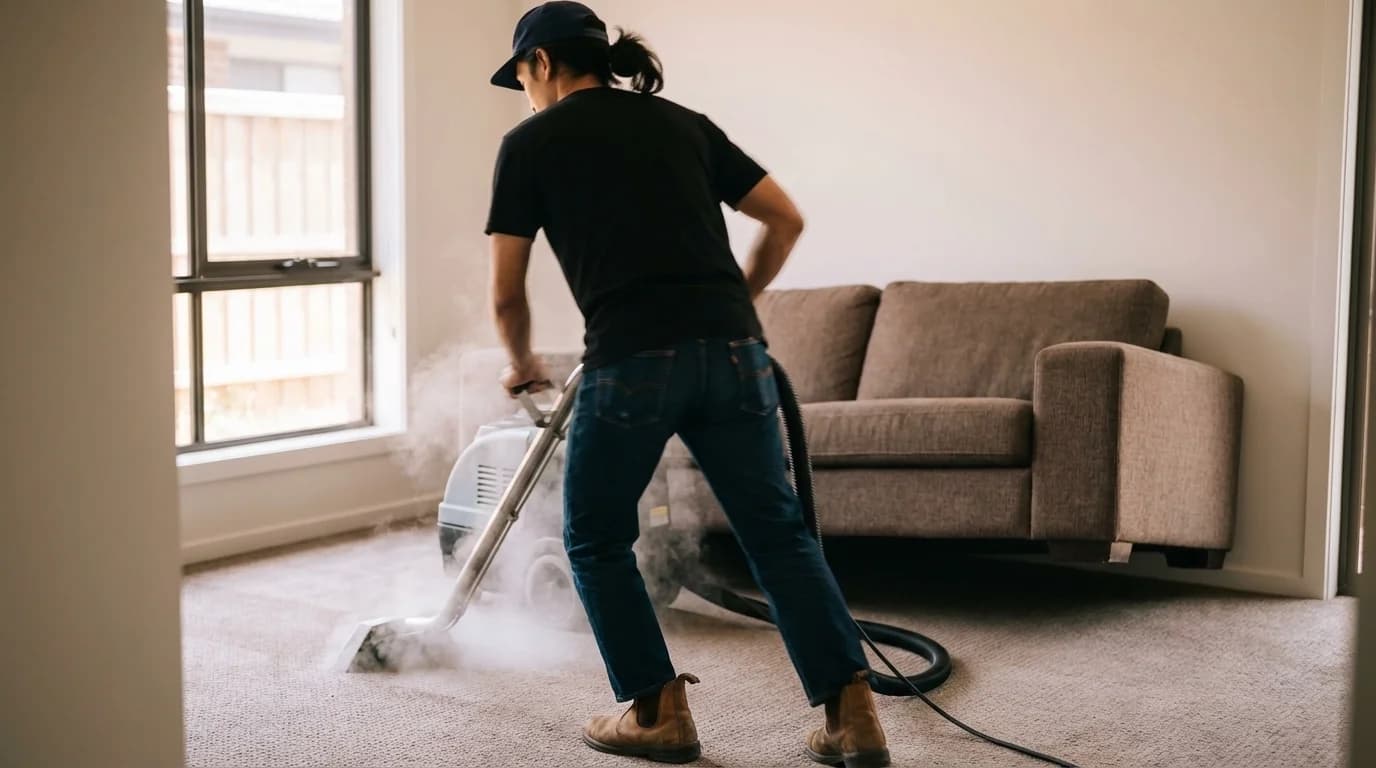
Professional carpet cleaners have access to a range of specialised solvents, enzyme treatments, and extraction equipment that is not available in consumer products. The steam cleaning equipment we use at Nusara, paired with our Agar product range, delivers extraction power and cleaning chemistry that household products cannot replicate. For end-of-lease situations where carpet condition directly affects your bond return, professional cleaning is not just advisable but is almost always a requirement of the lease itself.
The sooner you call for professional help, the better the outcome. If you have attempted DIY treatment and the stain remains, contact us before applying further products. Layering multiple cleaning products on a stain can create chemical reactions that set the stain more permanently or damage the carpet in ways that make professional treatment more difficult. Let us know what products you have already applied so we can plan our treatment approach accordingly.
Preventing Carpet Stains in Melbourne Homes
Prevention is always more effective than treatment, and a few practical strategies can dramatically reduce the frequency of carpet stains in your home.
A strict shoes-off policy at the front door eliminates the majority of tracked-in stains from soil, grass, oil, and road grime. This is particularly relevant for Melbourne homes during the wetter months when shoes carry significantly more outdoor contamination. A quality doormat at every entry point, ideally one outside and one inside the door, captures much of what shoes would otherwise deposit on your carpet.
Stain-resistant carpet treatment applied after professional cleaning creates a protective barrier that gives you more time to treat spills before they bond with the fibres. These treatments, available through professional carpet cleaners, are particularly worthwhile for high-traffic areas and rooms where food and drink are consumed.
Immediate access to basic stain treatment supplies prevents the delay that turns a manageable spill into a permanent stain. Keep a small kit somewhere accessible in your home containing white cotton cloths, paper towels, dish soap, white vinegar, baking soda, and hydrogen peroxide. When a spill happens, everything you need is within reach rather than requiring a search through the laundry cupboard.
For homes with young children, consider area rugs over carpet in primary eating and play areas. A washable rug protects the carpet underneath and can be cleaned or replaced far more easily than the carpet itself. In Melbourne homes where carpet runs through living and dining areas, a quality rug under the dining table catches the majority of food-related spills.
Regular professional carpet cleaning extends carpet life and maintains its stain resistance. Melbourne homes benefit from professional steam cleaning every six to twelve months depending on foot traffic, pets, and household size. Clean carpet fibres resist staining better than dirty ones, because embedded soil and oils compromise the fibre's natural resistance. Think of regular professional cleaning as maintaining your carpet's immune system against stains.
Ready for a Spotless Space?
Get a free, no-obligation quote from Melbourne's trusted cleaning professionals.
Get a Free Quote