Guides
Compassionate Hoarder Cleaning Services in Melbourne
Understanding hoarding disorder and how professional cleaning helps
A sensitive guide to hoarding disorder cleaning in Melbourne, explaining our compassionate approach, the staged cleaning process, and how we help families navigate this challenge with dignity and respect.
Understanding Hoarding Disorder
Hoarding disorder is a recognised mental health condition that affects an estimated two to six percent of Australians. It is not laziness, poor character, or a lifestyle choice. The American Psychiatric Association classifies hoarding disorder in the DSM-5 as a distinct condition characterised by persistent difficulty discarding possessions, regardless of their actual value, accompanied by significant distress at the thought of letting items go. Understanding this distinction is not just academically important. It is fundamental to providing cleaning services that are effective, respectful, and ultimately helpful rather than harmful.
The condition affects people across all demographics. In our experience working across Melbourne, hoarding disorder does not discriminate by suburb, income level, age, or background. We have worked in properties in Toorak, in Footscray, in Fitzroy, and in the outer eastern suburbs. The common thread is not the neighbourhood but the deeply personal nature of the struggle and the courage it takes to seek help.
Hoarding often develops gradually over years or decades, frequently triggered by loss, trauma, or significant life change. The accumulation that outsiders might view as simply too much stuff represents something much more complex for the person living with it. Each item carries emotional weight, whether it is perceived future usefulness, sentimental attachment, or anxiety about waste. Approaching a hoarding clean without understanding this emotional landscape risks re-traumatising the client and undermining any progress made.
For families witnessing a loved one living in hoarding conditions, the experience is often deeply distressing. There is genuine fear about safety, health, and quality of life, combined with frustration when well-meaning attempts to help are resisted. This dynamic is normal and expected. It is part of the condition, not a reflection of the relationship. Professional support, both from mental health practitioners and from cleaning teams experienced in hoarding environments, makes a meaningful difference precisely because it brings knowledge, structure, and emotional distance that family members cannot provide on their own.
Our Compassionate Cleaning Approach
Every hoarding clean we undertake begins with a confidential consultation, almost always at the property itself. This initial visit is not about quoting or scheduling. It is about listening. We sit with the client, and often their family members or support workers, and we talk about their goals, their concerns, and the boundaries they need us to respect. Some clients want everything sorted and the house completely cleared. Others want a specific room made safe and functional. Both starting points are equally valid.
We develop a staged plan that breaks the work into manageable phases. Attempting to clear an entire hoarding environment in a single day is counterproductive for most clients. It is overwhelming, it does not allow time for the emotional processing that accompanies letting go of possessions, and it often triggers a crisis that halts progress entirely. Instead, we typically work in sessions of four to six hours, focusing on one area at a time, and building momentum gradually as the client gains confidence in the process.
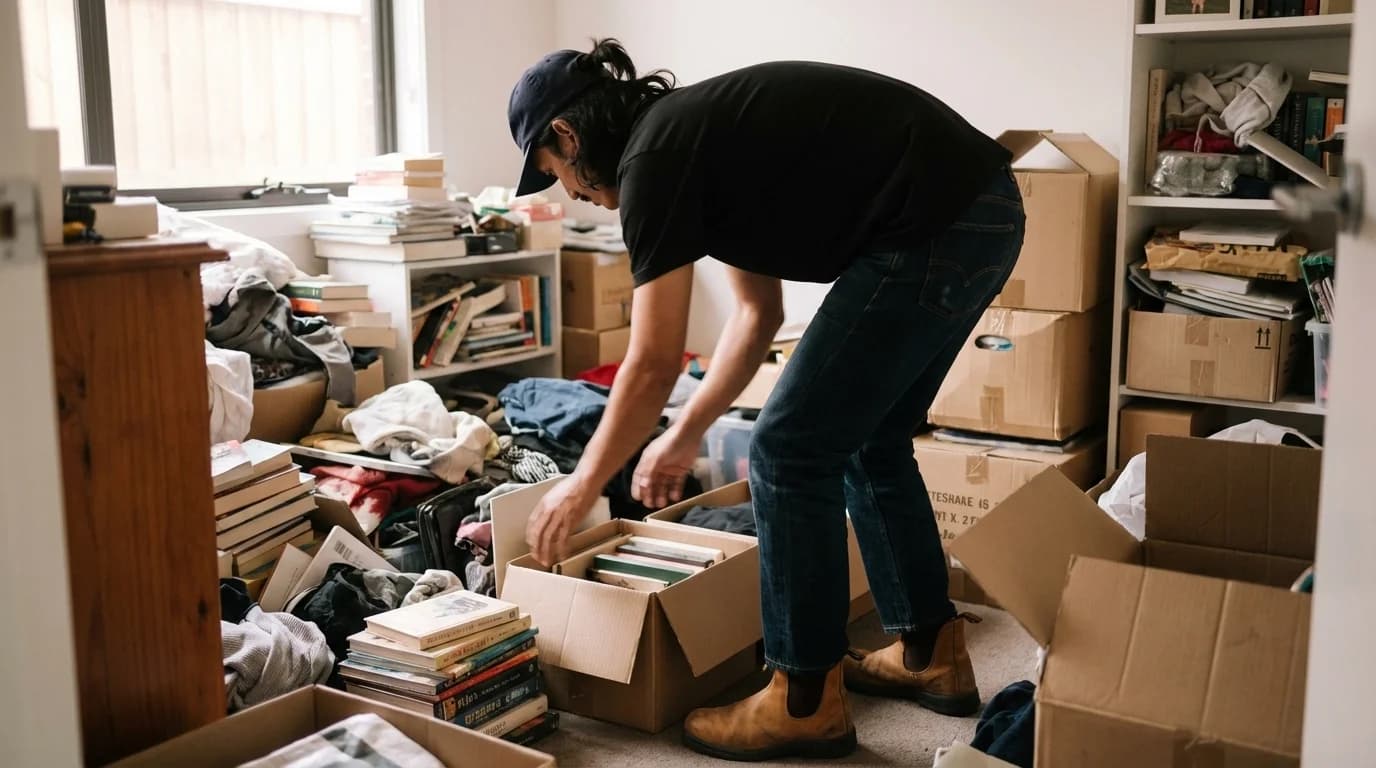
Our absolute rule is that we never discard anything without explicit permission from the client. Every item is presented and a decision is made together. We use a simple four-category sorting system: keep, donate, recycle, and discard. Items to be kept are cleaned and organised in the cleared space. Donations are packaged and delivered to appropriate charities across Melbourne. Recyclables are properly sorted. Only items that the client agrees to discard are removed.
This process takes patience. A single room can take multiple sessions. There will be items that the client cannot decide on, and we set those aside without pressure. There will be moments of overwhelm where we pause, make a cup of tea, and regroup. Our team understands that this work operates at the client's pace, not ours. The goal is not speed. The goal is sustainable progress that the client feels ownership over and can maintain after we leave.
For properties where the accumulation has reached a level that affects basic function, such as blocked pathways, inaccessible bathrooms, or kitchen areas that cannot be used, we prioritise creating safe, functional zones first. Restoring access to essential areas like the bathroom, kitchen, bedroom, and entry and exit points gives the client immediate quality of life improvement and demonstrates what is possible without requiring the entire property to be addressed at once.
Questions? We're Here to Help
Call us directly or send through your details. We typically respond within 24 hours.
Contact UsSafety and Health Considerations
Hoarding environments can present genuine health and safety risks that require careful management. Our team arrives equipped with appropriate personal protective equipment and the training to assess conditions before beginning work. Understanding these risks is important for families as well, because it explains why professional help is strongly recommended over attempting a DIY cleanup.
Pest activity is one of the most common health concerns in long-standing hoarding situations. Accumulated materials provide habitat for rodents, cockroaches, silverfish, and in some cases, more concerning pests. In Melbourne's climate, with its warm summers and mild winters, pest populations in undisturbed accumulations can be significant. We coordinate with licensed pest control operators when necessary, arranging treatment before or concurrent with cleaning work to ensure the environment is safe for everyone.
Mould is another frequent concern, particularly in Melbourne where winter humidity and poor ventilation contribute to growth in enclosed, crowded spaces. When accumulated items are packed against walls and restrict airflow, moisture becomes trapped and mould colonies establish themselves on walls, in carpet, and on the items themselves. Our team assesses mould presence during the initial consultation and arranges appropriate remediation when the scope exceeds surface cleaning.
Structural concerns occasionally arise in severe cases. Heavy accumulation over years can stress flooring, particularly in older Melbourne homes with timber subfloors. We assess floor loading and stability as part of our walkthrough and will recommend structural assessment by a qualified builder if we have concerns about floor integrity before we begin moving heavy volumes of material.
Biohazard materials, including expired food, animal waste, and medical waste, require specific handling protocols. Our team is trained in safe handling procedures and uses appropriate containment and disposal methods. We work with licensed waste management contractors for materials that require specialised disposal beyond standard council collection.
Dust levels in hoarding environments can be extreme. Years of undisturbed accumulation means airborne dust concentrations spike dramatically when materials are moved. We use HEPA-filtered equipment and ensure adequate ventilation throughout the cleaning process. For clients and family members present during cleaning, we recommend remaining in cleared areas and wearing masks if they have respiratory sensitivities.
Supporting Families Through the Process
Hoarding disorder affects entire families, and the cleaning process itself can bring complex emotions to the surface for everyone involved. Adult children who have watched a parent's hoarding worsen over decades carry frustration, guilt, and grief. Partners living in the environment may have reached a breaking point. Elderly parents may be facing the prospect of losing independent living if conditions do not improve. We have seen all of these situations across Melbourne families, and we approach each one with the understanding that our role extends beyond cleaning.
We encourage families to involve mental health professionals in the process wherever possible. A psychologist or counsellor experienced in hoarding disorder can provide the client with strategies for decision-making, emotional regulation during the cleanup, and long-term maintenance of the cleared environment. In Melbourne, organisations like the Hoarding and Squalor Support Network and local community health centres can connect families with appropriate mental health support.
For family members, we recommend establishing realistic expectations before the cleaning process begins. A hoarding environment that developed over ten or twenty years will not be resolved in a weekend. Progress may feel slow, and there will likely be setbacks. The client may agree to discard items one day and express regret the next. This is normal. Supporting the process means accepting its pace and celebrating genuine progress rather than measuring against an idealised outcome.
Our service includes follow-up visits after the initial cleaning is complete. These visits serve two purposes. First, they help maintain the cleared spaces and prevent re-accumulation from gaining momentum. Second, they provide accountability and encouragement for the client. Knowing that a scheduled visit is coming often motivates clients to maintain the standards established during cleaning. We can arrange these visits at whatever frequency makes sense, from weekly to monthly, gradually reducing as the client builds independent maintenance habits.
We treat every hoarding engagement with complete confidentiality. We arrive in unmarked vehicles, our team discusses the job only with the client and their nominated contacts, and no photographs or details are shared beyond what is necessary for the work itself. The stigma surrounding hoarding disorder is real, and we will never contribute to it. Our clients trust us with deeply personal situations, and protecting that trust is as important to us as the cleaning itself.
If you or a family member is dealing with hoarding and you are not sure where to start, a phone call to our team is a good first step. We will listen, answer your questions honestly, and help you understand what professional support looks like in practice. There is no obligation and no judgement. Just a conversation with people who understand the situation and genuinely want to help.
Ready for a Spotless Space?
Get a free, no-obligation quote from Melbourne's trusted cleaning professionals.
Get a Free Quote