Commercial Cleaning
The Link Between a Clean Office and Employee Productivity
Research-backed insights into how workplace cleanliness affects performance
Explore the proven connection between workplace cleanliness and employee productivity, with data-driven insights for Melbourne business owners and office managers.
What the Research Shows
The relationship between workplace cleanliness and employee productivity is supported by extensive research that goes well beyond common sense assumptions. A Harvard study found that employees in clean, well-maintained offices are up to sixteen percent more productive than those in cluttered, poorly maintained environments. This is not marginal improvement. For a Melbourne office with twenty employees, sixteen percent productivity improvement is equivalent to gaining three additional full-time team members worth of output without any additional hiring cost.
The correlation between cleanliness and cognitive function has been established across multiple studies. Research published in the Journal of Neuroscience demonstrated that physical clutter and unclean environments compete for attention, reducing working memory capacity and increasing cognitive fatigue. In practical terms, employees working in messy or poorly cleaned environments spend mental energy processing their surroundings rather than focusing on their work.
Australia-specific research reinforces these findings. A study by the Australian Institute of Management found that workplace environment quality ranks among the top five factors affecting job satisfaction and performance, alongside management quality, colleague relationships, compensation, and work-life balance. For Melbourne businesses investing in talent retention, workplace cleanliness is a tangible, controllable factor that directly influences whether employees feel valued and supported.
The financial implications are significant. A Melbourne office paying average salaries of eighty thousand dollars per employee generates approximately four hundred dollars per employee per working day in productive output. A sixteen percent improvement across twenty employees represents over three hundred thousand dollars in annual productivity gains. Even attributing a fraction of this improvement to cleaning quality, the return on professional cleaning investment is substantial.
Indoor Air Quality and Focus
Indoor air quality is the mechanism through which workplace cleanliness most directly affects cognitive performance. Harvard's COGfx study, one of the most comprehensive studies of indoor environmental quality and cognitive function, found that poor air quality reduces cognitive function by up to fifty percent. The study specifically identified ventilation rates, CO2 levels, and particulate matter as the primary environmental factors affecting cognitive performance.
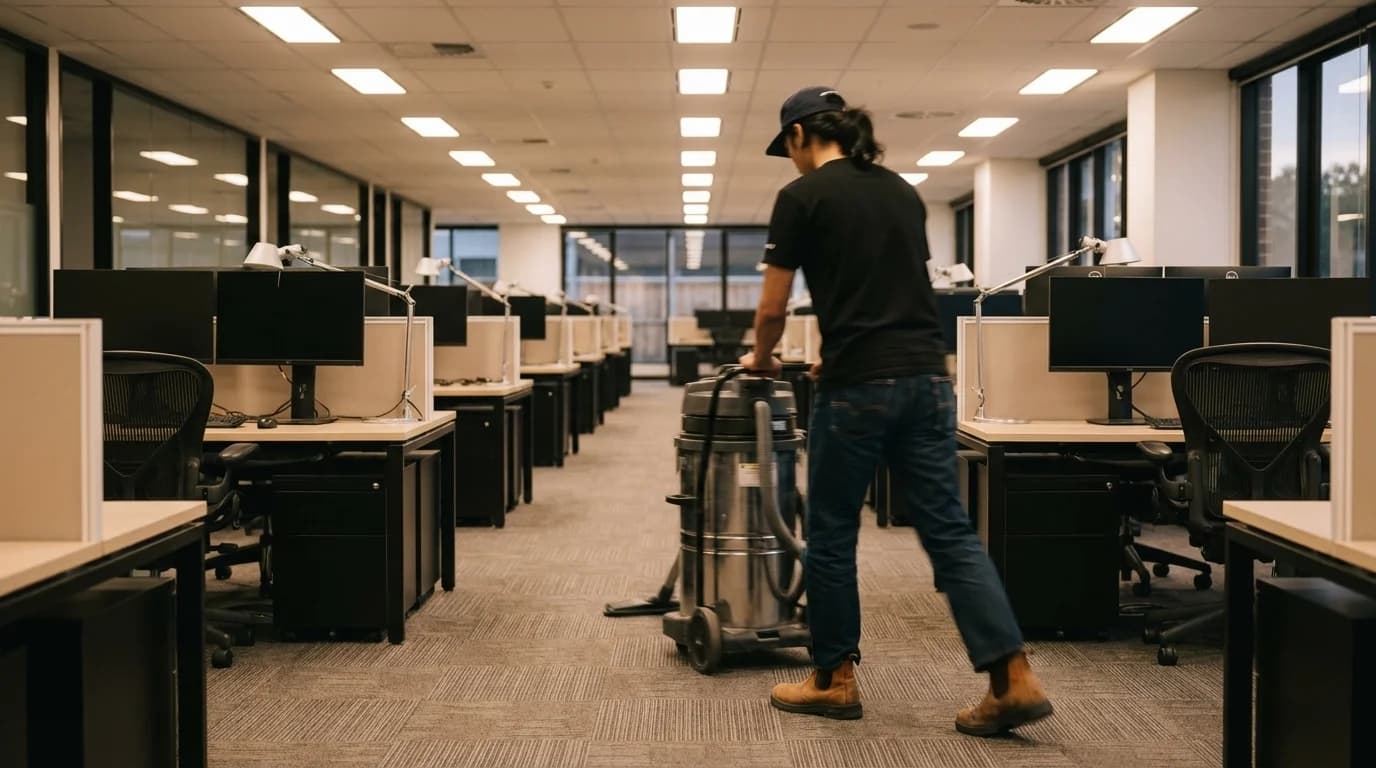
Regular professional cleaning removes dust, allergens, and pollutants that degrade indoor air quality over time. In commercial environments, these pollutants come from multiple sources: outdoor air filtering in through ventilation systems, skin cells and biological matter from occupants, off-gassing from furniture and equipment, printer and copier emissions, and residue from food preparation areas. Without regular thorough cleaning, these pollutants accumulate and concentrate in indoor air.
Melbourne's CBD offices and inner-suburban commercial spaces are particularly susceptible to poor air quality due to sealed building envelopes designed for energy efficiency. Modern commercial buildings recirculate air rather than drawing fresh air from outside, which means pollutants build up without adequate dilution. Professional cleaning that targets dust reservoirs, cleans ventilation components, and removes accumulated particulate matter is essential for maintaining healthy air quality in these environments.
For Melbourne businesses in older commercial buildings, where ventilation systems may be less sophisticated, professional cleaning becomes even more important. Older ducted systems, less effective filtration, and building materials that may include older insulation all contribute to air quality challenges that regular professional cleaning helps manage.
The practical impact is observable. Employees in professionally cleaned offices with good air quality report fewer afternoon energy dips, better sustained concentration during long meetings, and less frequent headaches. These are not dramatic effects but they are consistent, cumulative, and directly affect the quality and quantity of work produced.
Book a Free Consultation
Speak with our team about your cleaning needs, we'll tailor a solution for your space.
Schedule a CallReducing Sick Days Through Cleanliness
Regular professional sanitisation of shared surfaces delivers one of the most measurable returns on cleaning investment: reduced sick leave. Studies show up to forty-six percent reduction in illness-related absence in offices that implement thorough, regular professional cleaning programs compared to those with minimal or infrequent cleaning.
The mechanism is straightforward. Common illnesses spread through contact with contaminated surfaces. Door handles, kitchen areas, shared equipment, bathroom fixtures, and meeting room tables are all high-touch surfaces where bacteria and viruses accumulate and transfer between people. Regular professional sanitisation of these surfaces breaks the chain of transmission.
During Melbourne's winter flu season, from May through September, targeted sanitisation of high-touch surfaces is particularly impactful. Influenza and common cold viruses can survive on hard surfaces for up to forty-eight hours, meaning a single sick employee can contaminate dozens of surfaces during a workday, creating infection pathways for colleagues for two days after the initial contamination.
Kitchen and breakroom hygiene is often the weakest link in office cleanliness. Shared fridges, microwaves, sinks, and coffee machines are used by every employee but are often cleaned infrequently and inadequately. Professional cleaning programs that include daily kitchen sanitisation reduce the bacterial load in these high-risk areas significantly.
Bathroom cleanliness affects both health outcomes and employee perception. A poorly maintained bathroom suggests inadequate attention to hygiene throughout the facility. Regular professional bathroom cleaning that includes sanitisation of all surfaces, restocking of supplies, and attention to detail like clean mirrors and streak-free fixtures communicates a standard of care that employees appreciate and that contributes to overall workplace hygiene.
The financial case is compelling. The average cost of a sick day to a Melbourne employer, including lost productivity, replacement staff costs, and administrative burden, ranges from three hundred to five hundred dollars. For an office of twenty people averaging eight sick days per employee annually, a forty-six percent reduction represents savings of approximately twenty-five thousand to thirty-five thousand dollars per year, many times the cost of a professional cleaning program.
First Impressions: Client-Facing Spaces
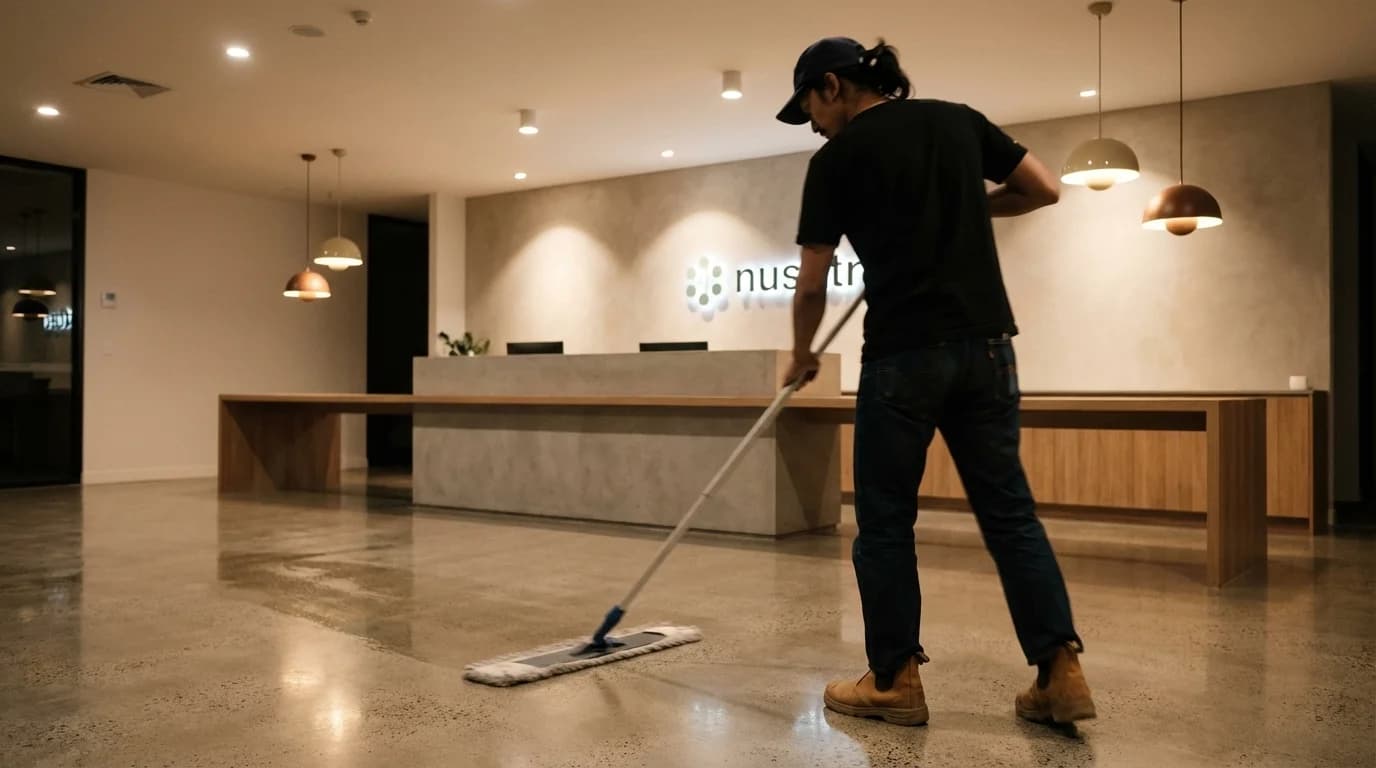
Your office cleanliness directly impacts how clients, partners, and visitors perceive your business. Research in environmental psychology consistently shows that people form judgments about competence, attention to detail, and professionalism based on the physical environment they encounter. A spotless reception area, clean meeting rooms, and well-maintained common spaces communicate standards that clients unconsciously associate with your work quality.
For Melbourne businesses that host clients regularly, the office environment is an extension of your brand. When a client walks into a reception area with polished surfaces, fresh air, and immaculate presentation, they experience a first impression that primes positive expectations for the meeting ahead. Conversely, visible dust, scuffed floors, or unclean bathrooms create doubt about attention to detail that can undermine even the strongest presentation.
Meeting rooms deserve particular attention because they are where your most important client interactions occur. Clients notice the details: clean tables, streak-free glass, fresh air, absence of previous meeting debris, and well-maintained technology equipment. A meeting room that looks and feels fresh creates a professional atmosphere that supports productive discussions.
For Melbourne businesses hosting interstate or international clients, a pristine office environment reinforces the professional image that Melbourne's business community is known for. Melbourne consistently ranks among the world's most liveable cities, and businesses here benefit from that reputation. Your office should reflect the same standard of quality and care that defines the city itself.
Rest rooms used by visitors are a critical touchpoint. A poorly maintained visitor bathroom can undo hours of impressive client engagement. Regular professional cleaning ensures bathrooms are consistently presentable, stocked, and hygienic. For businesses with high visitor traffic, mid-day bathroom checks by cleaning staff ensure standards are maintained throughout business hours.
Our commercial cleaning programs are designed with client-facing spaces as a priority. We focus additional attention on reception areas, meeting rooms, and visitor facilities, ensuring these spaces consistently reflect the professional standards your business represents.
Questions? We're Here to Help
Call us directly or send through your details. We typically respond within 24 hours.
Contact Us