Move-In / Move-Out
10 Bond Cleaning Tips Every Melbourne Renter Should Know
Insider knowledge from professional cleaners who work with real estate agents daily
Professional tips to help Melbourne renters pass their final inspection and secure their full bond refund, based on years of working with property managers across Melbourne.
Start With the Condition Report
**Tip 1: Get your condition report immediately.** Your move-in condition report is the single most important document in the bond return process. This is the benchmark your property manager will use to assess the property's condition when you leave. If you do not already have a copy, request one from your real estate agency without delay. Under Victorian tenancy law, your landlord or agent must provide this report, and it forms the legal basis for any bond claim.
Study the condition report carefully. Note any areas that were already marked as having existing damage or wear when you moved in. These areas cannot be claimed against your bond regardless of their current condition. Pay attention to descriptions like fair or good next to specific items, as these set the standard you need to meet, not exceed.
If your condition report includes photographs from move-in, compare them to the current state of those areas. Properties naturally show signs of use over a tenancy, and understanding what constitutes fair wear and tear versus cleaning issues helps you prioritise your efforts.
**Tip 2: Document everything with date-stamped photos.** Before cleaning begins, photograph every room, every surface, and every fixture. After cleaning is complete, photograph everything again. Use your phone's camera which automatically embeds date and time metadata in each image. Take wide shots of each room and close-ups of key inspection areas: oven interior, bathroom grout, carpet condition, window tracks, and behind appliances.
This photographic evidence is invaluable if any dispute arises. At VCAT, before-and-after photos from a professional or thorough DIY clean carry significant weight. They demonstrate effort and intent, and they provide objective evidence of the property's condition at the time of the clean. We provide these photos as standard with every end-of-lease clean, but even if you are cleaning yourself, create this record.
Focus on the Kitchen
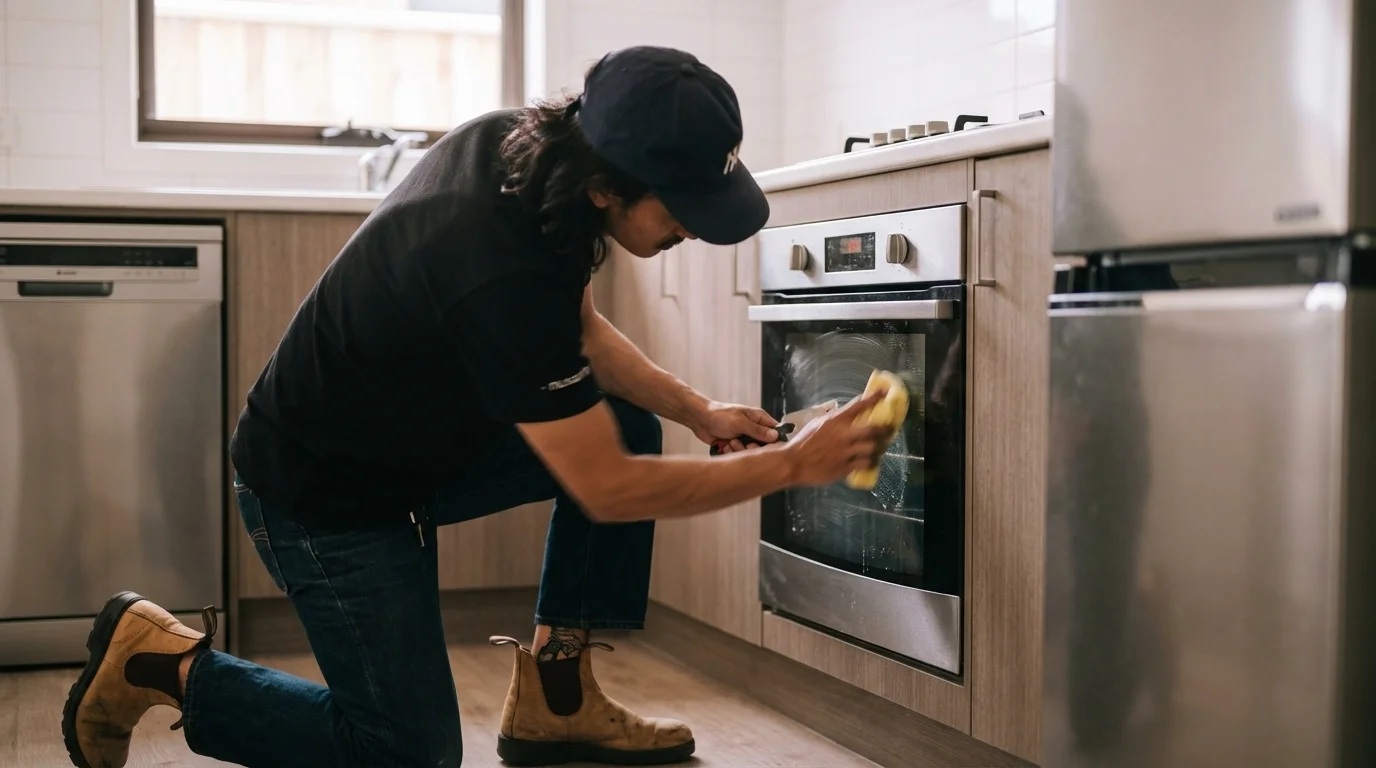
**Tip 3: The oven is the number one inspection fail point.** Ask any Melbourne property manager what they check first and most critically, and the answer is almost universally the oven. Grease buildup inside the oven cavity, on racks, on the door glass, and between glass panels is the most common reason for bond claims in Melbourne. The reason is simple: ovens get used constantly and rarely get the deep cleaning attention they need during a tenancy.
A professional oven clean costs eighty to one hundred and twenty dollars as a standalone service. Compare that to a bond claim of two hundred to four hundred dollars for oven cleaning, and the investment is obvious. If you are tackling the oven yourself, remove all racks, apply a quality degreaser, and allow it to work for at least thirty to sixty minutes before scrubbing. Do not forget the oven door glass, including between the panels, which most ovens allow you to disassemble for cleaning.
For ovens with self-cleaning cycles, run the cycle first to burn off major grease deposits, then manually detail any remaining residue. Self-cleaning cycles alone rarely achieve the spotless result that property managers expect.
**Tip 4: Clean behind and beside the stove and fridge.** Property managers regularly pull appliances away from the wall during inspections. What they find behind stoves and fridges is often months or years of accumulated grease, dust, food debris, and grime that tenants never see because the appliances hide it.
Pull your stove out carefully. Clean the wall behind it, the floor underneath, and both sides of the appliance itself. Do the same for the fridge. The space behind and beneath these appliances collects an impressive amount of debris over even a short tenancy, and a clean result here signals to the agent that the entire clean has been thorough.
Ready for a Spotless Space?
Get a free, no-obligation quote from Melbourne's trusted cleaning professionals.
Get a Free QuoteBathroom Essentials
**Tip 5: Mouldy silicone is the second most common fail point.** After ovens, bathroom silicone sealant is the area most likely to generate a bond claim. If your shower silicone has black mould that will not respond to cleaning, it has penetrated into the silicone material itself and cannot be removed with surface treatment.
Your options are professional mould treatment, which sometimes improves the appearance enough to pass inspection, or having the silicone removed and replaced. Re-sealing costs between eighty and one hundred and fifty dollars for a standard shower recess and takes a few hours. This is almost always cheaper than the bond deduction for mouldy silicone, which can run to two hundred dollars or more.
Prevention is ideal: regular squeegee use after showers, adequate ventilation, and periodic treatment with tea tree oil or hydrogen peroxide solution keeps silicone clean throughout your tenancy. But if you are reading this weeks before your lease ends, treatment or replacement are your practical options.
**Tip 6: Descale everything.** Melbourne water varies in hardness by suburb, but virtually every area produces enough mineral content to leave deposits on shower heads, taps, glass screens, and tiles over the course of a tenancy. Property managers notice limescale immediately because it dulls the appearance of otherwise clean fixtures.
Citric acid is the most effective and accessible descaling agent. Dissolve two tablespoons in a spray bottle of warm water, apply to affected surfaces, let it sit for ten to fifteen minutes, then scrub and rinse. For shower heads, unscrew them and soak in the citric acid solution for two to four hours. The difference is dramatic.
For glass shower screens with heavy water staining, you may need multiple applications or a specialised glass restoration product. Extremely stubborn staining that has etched into the glass may require professional treatment.
Floors and Carpets
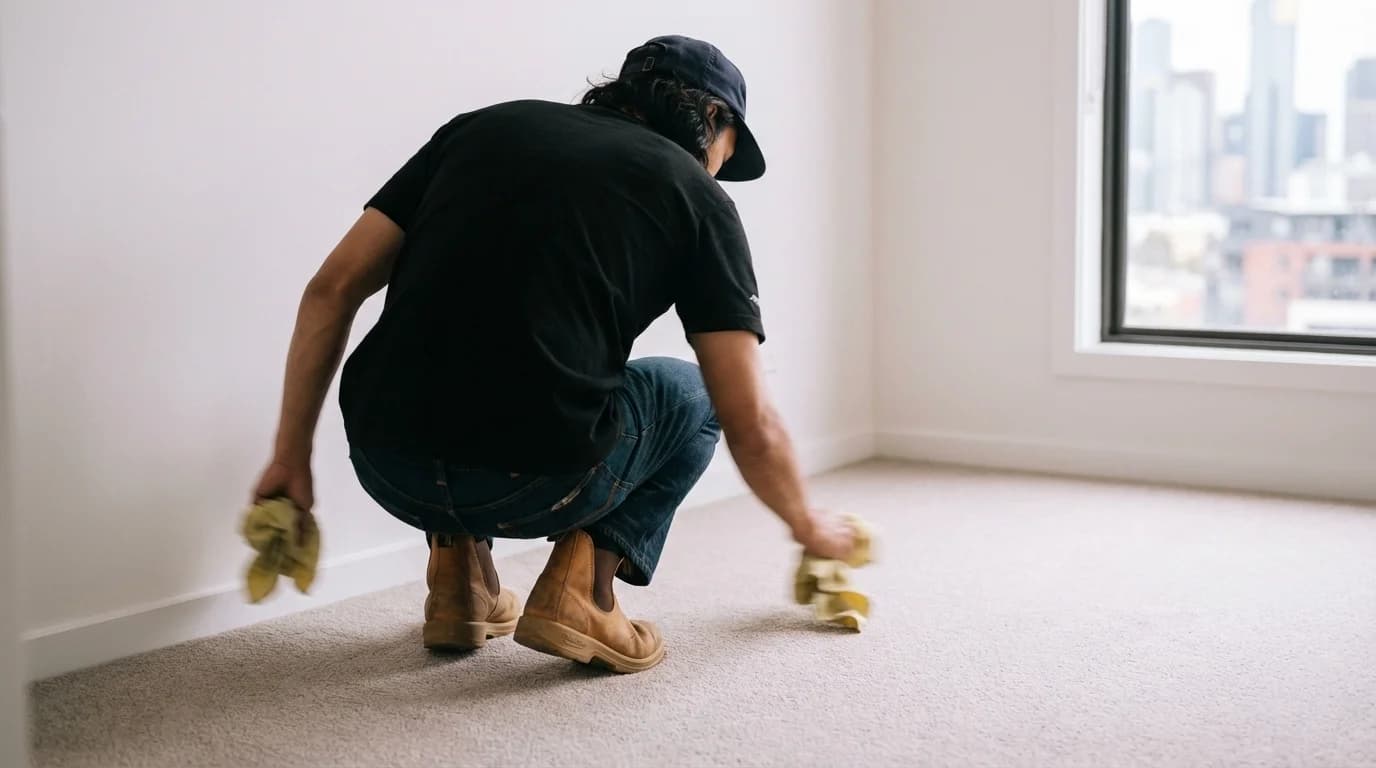
**Tip 7: Professional carpet steam cleaning is almost always required.** The vast majority of Melbourne rental leases include a clause requiring professional carpet cleaning on vacating. Even if your lease does not explicitly state this, property managers expect it and will likely request it. Do not skip this step.
Book a professional carpet steam clean and keep your receipt. Agents will ask for it during inspection, and without it, they may claim carpet cleaning costs from your bond regardless of whether the carpet looks clean. The receipt is your proof of compliance.
Our end-of-lease package includes carpet steam cleaning as standard, using eco-friendly Agar products that are effective on the stains and wear patterns typical in rental properties. If you are arranging carpet cleaning separately, ensure the provider uses hot water extraction, which is the method most leases specify, rather than dry cleaning or shampooing.
For heavily stained carpet, particularly in high-traffic areas, hallways, and near dining tables, discuss the condition with your carpet cleaner before the service. Some stains, particularly red wine, coffee, and pet urine, may need pre-treatment for the best result. Setting realistic expectations helps avoid disappointment.
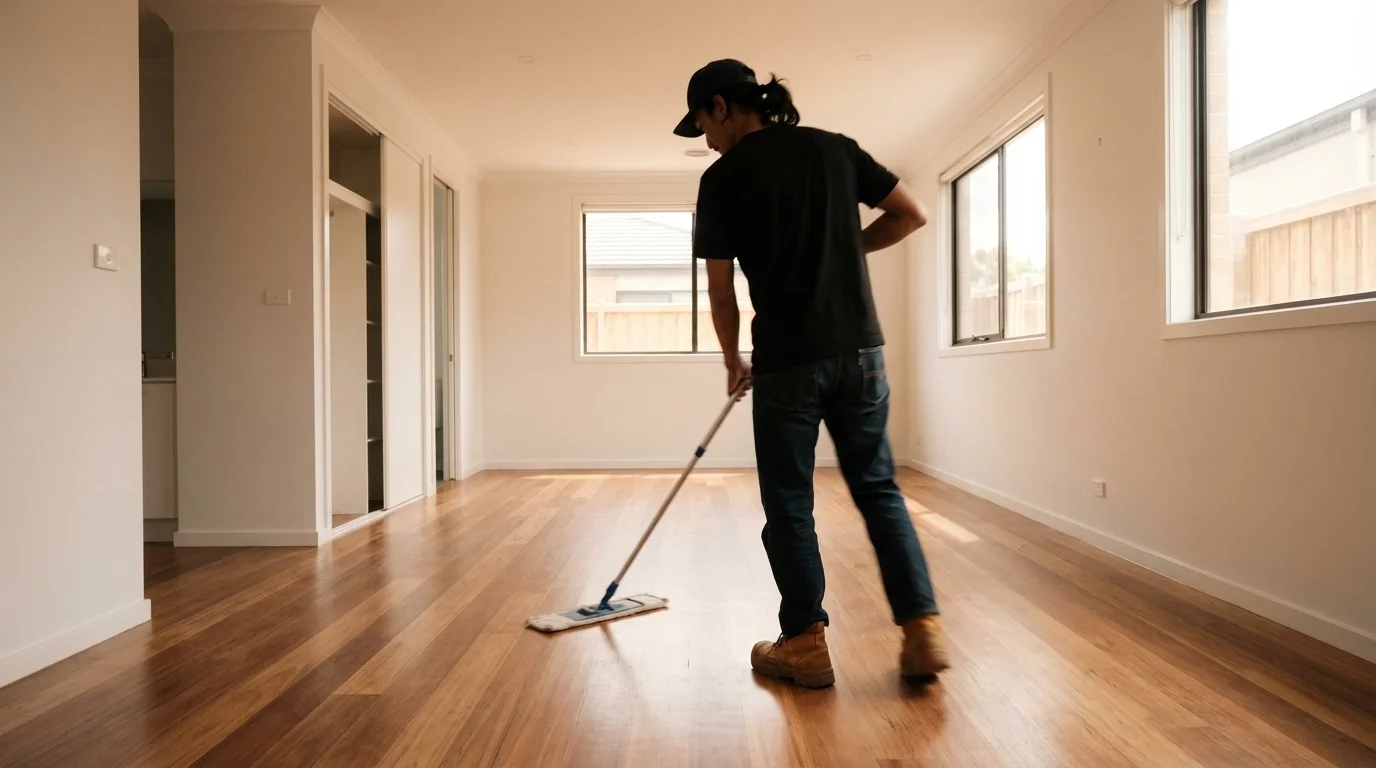
**Tip 8: Hard floor attention to detail matters.** For hard floors, whether tiles, timber, vinyl, or polished concrete, a thorough mop is the baseline. But the details are what separate a passing clean from one that raises questions. Pay attention to corners and edges where the mop does not quite reach. Clean along skirting boards where dust and debris accumulate. Ensure grout lines in tiled areas are clean and consistent in colour.
Use appropriate products for each floor type. Timber floors should never be cleaned with excessive water or harsh chemicals. Tiles respond well to a pH-neutral floor cleaner. Vinyl needs gentle products that will not dull the surface. Using the wrong product can damage floors and create a new problem.
The Final Details That Make the Difference
**Tip 9: Clean all the small things.** Window tracks, skirting boards, light switches, power points, door handles, and the tops of door frames. These small details might seem insignificant, but they signal thoroughness. When a property manager walks into a property and sees clean window tracks and dust-free skirting boards, they approach the rest of the inspection with confidence that the clean has been done properly.
Conversely, when they spot dirty window tracks or dusty skirting boards immediately, they become more critical in their inspection of everything else. These small elements set the tone for the entire walkthrough. A fifteen-minute investment in wiping every light switch, power point, and door handle in the property pays disproportionate dividends.
Do not forget the less obvious details either. Clean inside the laundry cupboard, wipe the tops of built-in wardrobes, and clean any shelving in storage areas like linen cupboards. Check the garage, including the ceiling and walls, not just the floor. Look at the property from the agent's perspective: they are methodically checking every element listed on the condition report.
**Tip 10: Schedule strategically.** The timing of your clean relative to your inspection matters more than most people realise. Book your professional clean after all furniture and belongings have been removed but one to two days before your scheduled inspection. This gives you time to do a final walkthrough after the clean, address any areas the cleaners might flag, and ensure the property still looks freshly cleaned when the agent arrives.
Same-day cleaning and inspections are risky. If the clean runs long, if an unexpected issue arises, or if you simply need to touch up an area, you have no buffer. That one-to-two-day window between clean and inspection is your insurance policy.
Arrive before your agent on inspection day. Do a quick check of the five most critical areas: oven, bathroom silicone and grout, carpets, window tracks, and behind appliances. Bring copies of all cleaning receipts including carpet steam cleaning. Hand over all keys, garage remotes, and security fobs at the inspection.
Book a Free Consultation
Speak with our team about your cleaning needs, we'll tailor a solution for your space.
Schedule a Call